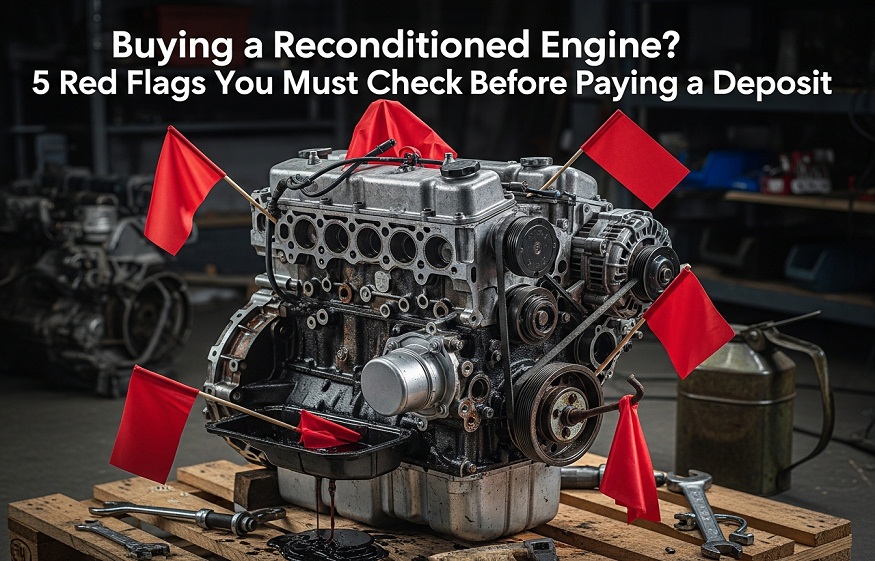
Essential Red Flags to Spot Before Handing Over Your Deposit
In 2026, with garage bills still climbing and new engines often costing more than the car itself, a reconditioned engine remains one of the smartest ways to keep a trusted vehicle on the road. A properly rebuilt unit—complete with honed bores, reground crankshaft, fresh OEM-spec bearings, and thorough compression testing—typically costs £2,200–£4,800 and can deliver near-new reliability for years. I’ve fitted and advised on hundreds of these over the years, working with everything from everyday family hatchbacks to commercial vans. The difference between a successful outcome and an expensive regret almost always boils down to due diligence before handing over any money. Paying a deposit without proper checks is one of the biggest risks drivers take. These five red flags have saved countless clients from financial loss and unnecessary stress—spot them early, and you’ll protect both your wallet and your peace of mind.
Red Flag 1: Lack of a Clear, Written Warranty with Proper Coverage
Any reputable supplier will provide a detailed warranty in writing—usually 12–24 months for a reconditioned engine, covering both parts and consequential labour costs if fitted by them. If they’re evasive about terms, offer only verbal assurances, limit coverage to 30–90 days, or exclude key failures like oil starvation damage, that’s a serious warning sign. Short or vague warranties often hide shortcuts in the rebuilding process, such as inadequate cylinder head resurfacing, skipped crankshaft grinding, or insufficient block honing.
From experience, the best specialists stand behind their work confidently because they adhere to rigorous British Engineering Standards and use genuine or high-quality equivalent components throughout. Always request the full warranty document upfront, including the exact claim procedure, required maintenance proof, and any exclusions. Cross-check independent reviews on Trustpilot or Google for real patterns in how they handle claims—do they respond quickly and fairly, or drag their feet?
I once advised a client who ignored this flag and paid an £800 deposit based on a “gentleman’s agreement” warranty. Four months later, when the engine developed bearing knock, the supplier disappeared entirely. In contrast, I’ve witnessed dozens of seamless claims from established businesses that honour 18–24-month policies without question, even covering recovery and labour. In today’s elevated parts price environment, comprehensive warranty protection isn’t a luxury—it’s essential insurance against unforeseen issues.
Red Flag 2: No Detailed Photos, Provenance, or Testing Evidence
You should never commit a deposit without seeing high-resolution, recent photos of the exact recon engine you’re buying—serial numbers clearly visible, block stampings, internal views where possible, and evidence of machining work like fresh honing marks or new oversized pistons and rings. Legitimate suppliers also freely share provenance details: verified donor vehicle mileage documentation, HPI clearance checks to rule out theft or finance issues, service history records if available, and proof of key processes.
If they rely solely on generic stock images, refuse specific close-up requests, or can’t supply compression test results and leak-down figures, walk away immediately. This frequently indicates they’re passing off lightly cleaned used engines or second-hand engines as fully reconditioned units. I always recommend asking for a short video walkthrough of the engine running on a test rig if you can’t inspect in person—reliable suppliers are happy to provide this.
This simple verification step has prevented countless headaches over the years. One owner I assisted nearly lost £1,200 on what appeared to be a bargain engine, only for detailed photos to reveal flood damage scarring inside the block. Transparent documentation not only builds trust but confirms you’re receiving genuine recycled vehicle components properly rebuilt to last, complete with fresh seals and gaskets.
Red Flag 3: Unrealistically Low Pricing That Defies Market Norms
When a quoted reconditioned engine price is dramatically below prevailing rates—perhaps £1,500 when similar specifications from established suppliers range £2,800–£4,200—proceed with extreme caution. Such unusually low offers almost always reflect compromised rebuilding standards: skipped essential steps like proper crankshaft grinding, valve seat recutting, thorough oil gallery cleaning, or using substandard replacement parts.
Current 2026 market rates factor in ongoing material and labour cost increases, yet quality specialists still provide fair, transparent fixed-price quotes that include VAT, clear surcharge exchange policies for your old core unit, and detailed breakdowns of machining costs. Always compare at least three reconditioned engines price lists UK from different reputable providers to establish a realistic benchmark.
I’ve watched numerous owners chase the cheapest quote, only to face premature failures—oil consumption, overheating, or bearing issues—that required expensive repairs or even another replacement. Paying a fair market price for verified quality, supported by a full machining and testing report, invariably proves cheaper and less stressful over the engine’s lifespan.
Red Flag 4: High-Pressure Tactics Demanding Large Upfront Deposits
Immediate demands for 50–100% payment upfront, accompanied by phrases like “this engine will sell today” or “special price ends tonight,” are classic high-pressure red flags. Trusted businesses typically request modest deposits—10–20% to secure stock—or utilise secure escrow services and buyer protection guarantees to safeguard both parties.
Rushed transactions often precede delayed deliveries, substituted lower-specification units, specification mismatches, or outright scams. Always take time to verify key details: company registration number, physical premises address, customer testimonials, and delivery timelines. A professional replacement engine supplier near me builds confidence gradually through open communication and transparency, never through manufactured urgency.
In one particularly memorable case, a client resisted intense pressure to pay £2,000 immediately and later discovered the identical “exclusive deal” had been advertised unchanged for months. Exercising patience and insisting on proper process directly preserved their substantial deposit.
Red Flag 5: Sparse, Mixed, or Clearly Manipulated Reviews
Independent customer feedback provides invaluable insight. Thoroughly check Trustpilot, Google Reviews, and specialist automotive forums for review volume, consistency, and detail. Warning signs include only a handful of reviews, frequent unresolved complaints about engine failures or poor after-sales support, suspiciously perfect scores lacking specifics, or obvious patterns of fake entries.
Strong, reliable suppliers typically accumulate hundreds of verified reviews mentioning successful installations, responsive communication, accurate delivery, and effective warranty handling. Pay particular attention to comments addressing real-world performance after fitting and how issues were resolved.
I make it standard practice to cross-reference multiple platforms before recommending any supplier. Businesses with genuine, proven track records consistently deliver properly tested, high-quality engines that perform reliably for years.
Your Essential Pre-Deposit Checklist: A Quick Reference Guide
Use this practical checklist before committing any money to ensure you’re dealing with a trustworthy supplier:
| Check | Green Flag | Red Flag |
| Warranty | 12–24 months written, covering parts & labour | Verbal only, vague, or less than 6 months |
| Documentation | Detailed recent photos + compression test results + provenance | Generic stock images or refusal to provide specifics |
| Pricing | Aligns with £2,200–£4,800 market range for specification | Hundreds or thousands below competitors |
| Deposit Terms | 10–20% or secure escrow/buyer protection | 50%+ demanded immediately with pressure |
| Reviews & Reputation | Hundreds of verified, detailed positive experiences | Few reviews, complaint patterns, or fake-looking entries |
Final Thoughts: Buy Smart and Drive with Confidence
Spotting and avoiding these five red flags transform a potentially risky purchase into a secure, worthwhile investment. A quality reconditioned engine, sourced from a reputable specialist with full transparency, documentation, and warranty support, can extend your vehicle’s reliable service life by many years while saving you thousands compared to dealership new units or repeated repairs.
The extra time spent verifying details upfront always pays off in smoother installation, fewer surprises, and genuine peace of mind on the road. In 2026’s challenging economic climate—where every pound counts—making informed, cautious decisions about major automotive repairs has never been more important. Take your time, ask the tough questions, trust verified evidence over promises, and you’ll end up with an engine that performs brilliantly for the long haul.



Leave a Reply
You must be logged in to post a comment.